Content marketing drives business growth by turning strangers into customers. Instead of pitching products, you publish highly valuable content that solves real problems.
Understanding how content marketing drives business growth unlocks massive benefits of content marketing for businesses: it builds unstoppable brand authority, captures warm leads, and powers long-term sales growth far cheaper than traditional ads.
Start prioritizing content marketing strategies for growth today—your competitors already are.
Table of Contents
- What Is Content Marketing and Why Does It Matter in 2026?
- What Counts as Content Marketing Today
- Why Traditional Advertising Is Becoming Less Effective
- How Consumer Buying Behavior Has Changed
- The Real Role of Content in the Modern Buyer Journey
2. How Content Marketing Drives Business Growth
- How Content Generates Qualified Leads
- How Content Builds Brand Trust at Scale
- How Content Influences Purchase Decisions
- How Content Reduces Customer Acquisition Costs
- How Content Creates Long-Term Business Assets
- How Content Increases Customer Lifetime Value
3. The Content Marketing Revenue Engine Explained
- Awareness Stage Content
- Consideration Stage Content
- Decision Stage Content
- Retention Stage Content
- Advocacy Stage Content
4. Why Most Businesses Fail at Content Marketing
- Publishing Without a Strategy
- Chasing Traffic Instead of Revenue
- Ignoring Search Intent
- Creating Content Without Distribution
- Measuring the Wrong Metrics
5. The Hidden Content Marketing Truth Most Experts Never Discuss
- Content Alone Does Not Generate Revenue
- Distribution Often Matters More Than Creation
- Great Content Can Still Fail
- Why Some Low-Quality Content Outperforms Better Content
- The Economics of Content Marketing
6. How to Build a Revenue-Focused Content Strategy
- Define Business Goals First
- Map Content to Revenue
- Create Audience Personas
- Identify Buying Triggers
- Build Topic Clusters
7. 100 Proven Content Marketing Strategies to Grow Your Business
- SEO Content Strategies (1–20)
- Lead Generation Strategies (21–40)
- Trust-Building Strategies (41–60)
- Revenue Acceleration Strategies (61–80)
- Content Distribution Strategies (81–100)
8. How Much Content Does a Business Actually Need?
- Quality vs Quantity
- Publishing Frequency Benchmarks
- Small Business Content Requirements
- Enterprise Content Requirements
9. How Long Does Content Marketing Take to Show Results?
- First 30 Days
- First 90 Days
- First 6 Months
- First Year
10. Content Marketing vs Paid Advertising
- Cost Comparison
- ROI Comparison
- Scalability Comparison
- Which Should You Choose
11. AI and the Future of Content Marketing
- How AI Is Changing Content Creation
- What AI Cannot Replace
- Human Expertise as a Competitive Advantage
- How to Use AI Without Losing Authenticity
12. Content Marketing Metrics That Actually Matter
- Revenue Attribution
- Lead Quality
- Customer Acquisition Cost
- Customer Lifetime Value
- Content ROI
13. Frequently Asked Questions
Key Takeaways
- Content marketing drives business growth by building a durable, compounding acquisition channel that paid advertising cannot replicate
- Strategy before publishing — businesses that define goals, map content to revenue, and build topic clusters consistently outperform those that publish without direction
- Full-funnel content wins — awareness, consideration, decision, retention, and advocacy stages each require distinct content; ignoring any stage leaves revenue on the table
- Distribution is not optional — great content that nobody sees generates zero results; creation and distribution deserve equal investment
- Results take time — the first 90 days build infrastructure; meaningful growth becomes visible at 6 months; compounding fully reveals itself at 12 months
- Quality over quantity — two deeply researched, strategically targeted pieces per month outperform daily thin publishing every time
- AI accelerates production but cannot replace expertise — human insight, original research, and authentic perspective are the true competitive differentiators in 2026
- Measure what matters — revenue attribution, lead quality, customer acquisition cost, and content ROI are the only metrics worth optimizing for
- Small businesses can compete — depth in a focused niche consistently beats breadth across a broad market
- Content is a long-term asset — every strategic piece published today works for your business tomorrow, next year, and five years from now
What Is Content Marketing and Why Does It Matter in 2026?
Content marketing is the strategic practice of publishing valuable, problem-solving material to attract and retain a specific audience.
According to Averi AI, In 2026, it matters urgently because AI search overviews and chatbots now dominate discovery. Implementing precise content marketing strategies for growth is no longer optional. This approach is exactly how content marketing drives business growth today: it builds unshakeable brand authority and trust, secures visibility in generative search results, and converts passive users into active buyers faster than traditional advertising.
The core benefits of content marketing for businesses boil down to long-term digital survival and scalable lead generation. If you do not invest in providing authoritative, human-validated answers right now, your business will simply become invisible online.
Content marketing drives business growth by replacing interruption with value. Instead of chasing customers, you attract them. In 2026, businesses that publish helpful, strategic content consistently outperform competitors spending twice as much on ads. That’s not opinion — that’s market reality.
What Counts as Content Marketing Today?
Content marketing is any asset your business creates to attract, educate, and convert an audience without directly selling. Blog posts, videos, podcasts, email newsletters, LinkedIn carousels, case studies, calculators, webinars — all of it counts. If it answers a question your buyer is already asking, it’s content marketing working for your business.
Why Traditional Advertising Is Becoming Less Effective
Ad costs are rising. Attention spans are shrinking. Ad blockers are everywhere. Consumers skip pre-roll, ignore banners, and distrust sponsored posts. Traditional advertising interrupts. Content marketing earns attention. That’s a fundamental difference — and it’s why smart businesses are shifting budgets toward content that compounds over time instead of ads that stop the moment you stop paying.
How Consumer Buying Behavior Has Changed
Today’s buyer does 70% of their research before ever contacting a sales team. They Google problems. Consumers now read comparison articles. They watch explainer videos. They check reviews. The consumers consume content — your content, or your competitor’s. If you’re not producing content that shows up in that research phase, you’re invisible to the most important moment in the buying journey.
The Real Role of Content in the Modern Buyer Journey
Content doesn’t just create awareness. It builds trust, handles objections, demonstrates expertise, and accelerates decisions. Every piece of content is a touchpoint that moves a prospect closer to buying. Understanding how content marketing drives business growth starts here — with recognizing that content is not a marketing add-on. It is your entire sales infrastructure, working 24 hours a day.
How Content Marketing Drives Business Growth
Content marketing drives business growth by consistently solving your audience’s core problems. Instead of buying fleeting ads, you build digital assets that attract warm traffic day and night.
Understanding exactly how content marketing drives business growth reveals the true benefits of content marketing for businesses. It establishes dominant brand authority, scales customer engagement, and fuels predictable sales growth.
If you aren’t deploying targeted content marketing strategies for growth right now, you are actively losing market share to competitors who do.
How content marketing drives business growth isn’t a theory — it’s a documented, measurable process. Businesses that execute content strategy correctly generate more leads, close faster, retain longer, and spend less acquiring each customer. Here’s exactly how it works.
How Content Generates Qualified Leads
Content marketing for lead generation works because it attracts people already looking for what you sell. A business searching “how to reduce employee turnover” and landing on your HR software blog is a warmer lead than anyone you’d reach through cold outreach. Content filters out browsers and surfaces buyers. That’s how content marketing drives business growth at the pipeline level — better leads, lower acquisition cost, higher close rates.
How Content Builds Brand Trust at Scale
Content marketing for brand authority works through consistent, expert-driven publishing over time. When your business answers the hardest questions in your industry — clearly, honestly, without gatekeeping — buyers start associating your brand with competence. Trust is the #1 purchase driver. Content is the most scalable trust-building tool available to any business, at any size.
How Content Influences Purchase Decisions
Buyers don’t decide in a vacuum. They read comparison posts, study case studies, watch demos, and consume reviews. Content marketing for sales growth means creating every asset a buyer needs to say yes — product comparisons, objection-handling FAQs, ROI calculators, customer success stories. The business that controls that content controls the decision.
How Content Reduces Customer Acquisition Costs
Paid acquisition costs compound upward. Content costs compound downward. A single well-optimized blog post can generate leads for five years. A case study shared in sales conversations closes deals without additional ad spend. How content marketing drives business growth financially is simple: it builds a durable acquisition channel that gets cheaper per lead over time while paid channels get more expensive.
How Content Creates Long-Term Business Assets
Every piece of strategic content you publish is a business asset — one that generates traffic, leads, and revenue long after it’s written. Unlike ad spend that disappears the moment you stop funding it, content compounds. A pillar page built today becomes a top-ranking asset in 12 months. That’s how content marketing drives business growth in ways that traditional marketing simply cannot replicate.
How Content Increases Customer Lifetime Value
Content marketing for customer engagement doesn’t stop at the sale. Onboarding guides, tutorial videos, customer newsletters, and educational content keep customers successful — which keeps them subscribed, buying more, and referring others. Businesses that invest in post-sale content see measurable improvements in retention rates and lifetime value, both of which directly impact revenue growth.
The Content Marketing Revenue Engine Explained

The revenue engine shows how content marketing drives business growth by turning helpful information into a predictable sales pipeline. It functions as a compounding asset, not an expense.
By scaling content marketing strategies for growth, you capture the true benefits of content marketing for businesses: higher customer engagement, compounding traffic, and non-stop lead generation. Turn the engine on now to secure your market share.
How content marketing drives business growth at scale requires a full-funnel approach. Each stage of the buyer journey needs different content. Most businesses only create top-of-funnel content and wonder why it doesn’t convert. Build all five stages and you build a revenue engine.
Awareness Stage Content
This is where content marketing for website traffic begins. Blog posts, YouTube videos, social content, and podcast episodes targeting broad, problem-aware keywords bring new audiences into your ecosystem. The goal here isn’t conversion — it’s discovery. Get found by the right people before they know your brand exists.
Consideration Stage Content
Buyers evaluating solutions need comparison guides, expert breakdowns, webinars, and case studies. This is where content marketing for brand authority becomes a competitive weapon. When your content objectively helps a buyer understand their options — and demonstrates your expertise in doing so — you don’t need to sell. The content does it for you.
Decision Stage Content
Pricing pages, product demos, ROI calculators, customer testimonials, and free trial offers belong here. Content marketing for sales growth is most direct at this stage. Decision-stage content removes the final friction between interest and purchase. Every business should have clear, compelling decision-stage assets — most don’t, and it costs them closed deals daily.
Retention Stage Content
How content marketing drives business growth beyond the first sale is often overlooked. Tutorial content, onboarding sequences, success guides, and customer communities keep buyers engaged and successful. Customers who succeed stay longer, spend more, and refer others. Retention content is arguably the highest-ROI content investment any business can make.
Advocacy Stage Content
Happy customers become amplifiers — but only if you give them tools. Case study requests, referral program content, shareable assets, and user-generated content campaigns turn customers into your most credible marketing channel. Word-of-mouth driven by content is how content marketing drives business growth in its most powerful, sustainable form.
Why Most Businesses Fail at Content Marketing
Most businesses fail because they treat content like a megaphone instead of a tool for customer engagement. They abandon it too early, completely missing how content marketing drives business growth over time.
Without targeted content marketing strategies for growth, you lose the core benefits of content marketing for businesses: sustainable brand authority and high-converting lead generation. Fix your strategy now before your visibility drops completely.
Understanding how content marketing drives business growth also means understanding why most businesses never see results. Failure is almost always predictable — and almost always avoidable.
Publishing Without a Strategy
Most businesses start blogging without a plan, publish inconsistently, and quit after six months when nothing happens. Content marketing without strategy is just noise. Every piece of content needs a defined purpose, a target audience, a specific keyword, and a clear conversion goal. Publishing for the sake of publishing is not content marketing — it’s content waste.
Chasing Traffic Instead of Revenue
High traffic means nothing if it doesn’t convert. Businesses obsessed with pageviews often attract the wrong audience entirely. How content marketing drives business growth requires targeting buyer-intent keywords and audience segments that actually purchase — not just browse. Traffic is a means to an end. Revenue is the end.
Ignoring Search Intent
Publishing a blog post targeting the wrong search intent is invisible work. A buyer searching “best CRM software” wants a comparison list, not a history of CRM technology. Mismatched content fails to rank, fails to engage, and fails to convert. Matching content format and depth to search intent is a non-negotiable requirement of content marketing that actually works.
Creating Content Without Distribution
Content that nobody sees generates zero results. Most businesses spend 90% of their time creating and 10% distributing. That ratio should be reversed. Email, LinkedIn, communities, syndication, employee advocacy, and strategic partnerships are how content reaches the audience it was built for. Distribution is not optional — it is where results actually happen.
Measuring the Wrong Metrics
Vanity metrics — social likes, page views, follower counts — do not pay salaries. How content marketing drives business growth is measured in leads generated, customer acquisition cost reduced, revenue attributed, and lifetime value improved. Businesses that track the wrong numbers make the wrong decisions and conclude that content marketing doesn’t work — when the real problem was never knowing what to measure.
The Hidden Content Marketing Truth Most Experts Never Discuss
The hidden truth is that content marketing is a winner-take-all compounding asset, not a quick fix. Experts hide that AI requires human-validated depth to capture visibility.
Executing hyper-focused content marketing strategies for growth is precisely how content marketing drives business growth today. Realize the true benefits of content marketing for businesses: bulletproof brand authority and automated lead generation. Dominate your niche now before AI completely filters you out.
Every industry has uncomfortable truths. Content marketing has several. Understanding them is what separates businesses that build real growth engines from those that publish indefinitely and wonder why nothing changes.
Content Alone Does Not Generate Revenue
Content is not a business strategy — it is a component of one. How content marketing drives business growth requires conversion architecture, sales follow-up, product-market fit, and operational capacity to handle demand. Businesses that invest in content without fixing their offer, their sales process, or their user experience will generate traffic that converts into nothing.
Distribution Often Matters More Than Creation
A mediocre article promoted to the right audience outperforms a brilliant article that nobody reads. Consistently. The businesses winning at content marketing are not always creating the best content — they’re distributing it most effectively. Owned audiences, strategic partnerships, and channel dominance matter more than perfect prose.
Great Content Can Still Fail
Even strategically sound, expertly written, perfectly optimized content can fail due to factors outside your control — algorithm changes, emerging competitors, shifts in search behavior, or simply poor timing. Content marketing is not a guaranteed outcome. It is a probability game. The more consistently you play, the better your odds — but no individual piece is guaranteed to succeed.
Why Some Low-Quality Content Outperforms Better Content
Domain authority, backlink profiles, publishing frequency, brand recognition, and distribution networks mean that a mediocre post from a high-authority site often outranks a superior post from a newer domain. This is frustrating but true. Understanding how content marketing drives business growth in a competitive environment means playing a long-term authority game, not expecting immediate results from individual pieces.
The Economics of Content Marketing
Content marketing is not free. It requires time, expertise, strategy, production, and distribution investment. The economics only work when you commit long enough for compounding to kick in — typically 9 to 12 months minimum. Businesses that treat content as a cheap alternative to advertising almost always underfund it, understaff it, and abandon it before results materialize.
How to Build a Revenue-Focused Content Strategy
To build a revenue-focused strategy, map your content directly to commercial search intent. Stop publishing generic fluff and start creating targeted content marketing strategies for growth that address high-value customer pain points.
This bottom-of-funnel focus is how content marketing drives business growth rapidly. It unlocks the core benefits of content marketing for businesses: immediate lead generation, commanding brand authority, and accelerated sales growth. Pivot your strategy today to capture active buyers before your competitors do.
How content marketing drives business growth starts with strategy — not publishing. Businesses that build strategy first consistently outperform those that create content first and strategize later.
Define Business Goals First
Before writing a single word, define what growth means for your business. Is it lead volume? Revenue per customer? Market share in a specific vertical? Brand recognition in a new geography? Every content decision flows from these goals. Content marketing strategies for growth are only as strong as the business objectives they’re built to serve.
Map Content to Revenue
Every content type should have a documented path to revenue. Awareness content feeds email lists. Email lists feed lead nurture. Lead nurture feeds sales conversations. Sales conversations generate revenue. If you can’t draw a clear line from a piece of content to a business outcome, question whether it should be created at all.
Create Audience Personas
Generic content serves no one. Effective content marketing for customer engagement requires deep understanding of who you’re writing for — their job titles, their pain points, their buying triggers, their preferred content formats, and their decision-making process. The more specifically you define your audience, the more precisely you can serve them — and the more effectively your content converts.
Identify Buying Triggers
What makes your ideal customer start searching for a solution? A failed audit? A new compliance requirement? A competitor gaining market share? Identifying buying triggers allows you to create content that reaches prospects at the exact moment they become buyers. This is content marketing for lead generation at its most precise and most effective.
Build Topic Clusters
Topic clusters are the architecture of modern content strategy. One comprehensive pillar page covers a broad topic. Supporting cluster content covers specific subtopics in depth, all linking back to the pillar. This structure signals topical authority to search engines, improves rankings across an entire subject area, and guides buyers through a logical content journey that accelerates purchase decisions.
100 Proven Content Marketing Strategies to Grow Your Business and Increase Revenue
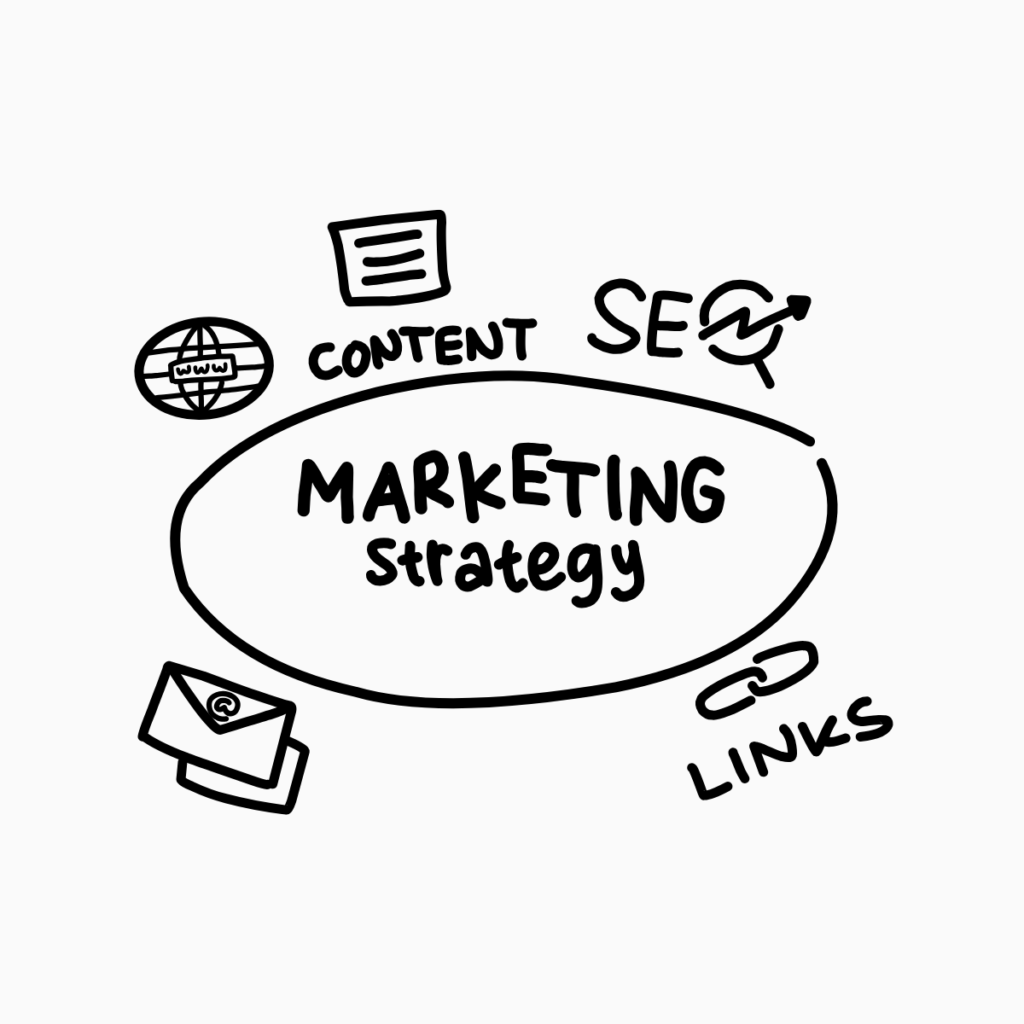
How content marketing drives business growth in practice comes down to execution. These 100 strategies are organized by function — each one battle-tested, each one tied directly to measurable business outcomes.
SEO Content Strategies (1–20)
- Build topic clusters — Group related content around a central pillar page to establish topical authority and improve rankings across an entire subject area, not just single keywords.
- Create pillar pages — Develop comprehensive, long-form pages covering core topics in full depth. Pillar pages rank for dozens of keywords and anchor your entire content ecosystem.
- Target long-tail keywords — Long-tail queries have lower competition and higher purchase intent. They convert better and rank faster, especially for newer domains building authority.
- Publish comparison articles — “X vs Y” content captures buyers in active evaluation mode. These readers are close to a decision — the highest-value traffic your site can attract.
- Create alternative pages — “Best alternatives to [Competitor]” pages intercept dissatisfied customers actively searching for a switch. High intent, high conversion, underutilized by most businesses.
- Optimize existing content — Refreshing and improving existing pages that already rank is the fastest path to traffic growth. More effective than creating new content for most established sites.
- Update old content — Pages with outdated statistics, broken links, or stale information lose rankings over time. Regular audits and updates protect and recover search visibility.
- Build content hubs — Curated resource centers organized by topic give visitors a reason to stay, explore, and trust your brand as the definitive source on a subject.
- Answer People Also Ask questions — PAA boxes dominate search results. Content that directly answers these questions earns featured placement and captures research-phase traffic at scale.
- Capture featured snippets — Structure content with clear definitions, numbered lists, and concise answers to earn the zero-position snippet. This placement can double organic click-through rates.
- Create local SEO content — Location-specific service pages, local guides, and city-focused content drive foot traffic and local leads for businesses with geographic service areas.
- Publish statistics pages — Original data and curated industry statistics earn backlinks organically. They’re referenced by journalists, bloggers, and researchers — building authority without active outreach.
- Create industry glossaries — Glossary content ranks for definitional queries, builds topical depth, and establishes your brand as the educational authority in your space.
- Build resource centers — A well-organized library of guides, templates, and tools becomes a destination that search engines reward with authority and readers bookmark for repeated visits.
- Use schema markup — Structured data helps search engines understand and display your content in rich results — review stars, FAQs, how-to steps — improving visibility without changing rankings.
- Create evergreen content — Foundational content that stays relevant for years delivers compounding ROI. One evergreen guide can generate consistent leads for a decade with minimal maintenance.
- Target low-competition keywords — New domains and small businesses should prioritize winnable keywords first. Early rankings build authority, drive early traffic, and create momentum for harder targets.
- Create problem-solving content — Content that directly solves a specific, painful problem ranks well, earns shares, and attracts exactly the readers most likely to need your solution.
- Create trend reports — Annual or quarterly trend content attracts media coverage, earns backlinks, and positions your brand as the forward-looking authority in your industry.
- Build authority content — Long-form, deeply researched guides on competitive topics build domain authority over time and become the go-to reference your entire industry links to.
Lead Generation Strategies (21–40)
- Lead magnets — Offer a specific, high-value resource in exchange for an email address. The more precisely the lead magnet solves a defined problem, the higher the conversion rate.
- Templates — Ready-to-use templates for common business tasks convert exceptionally well because they save time immediately. They also attract high-intent prospects who actively use them.
- Checklists — Simple, actionable checklists are among the highest-converting lead magnets available. They’re fast to consume, immediately useful, and easy to justify sharing contact information for.
- Industry reports — Original research packaged as a downloadable report generates leads, earns media coverage, and positions your brand as the authoritative data source in your industry.
- Free audits — Offering a free website audit, content audit, or strategy review attracts prospects actively looking for improvement — and puts your team in a direct sales conversation.
- Calculators — ROI calculators, cost estimators, and savings tools generate leads by delivering personalized value. Prospects who use calculators are actively evaluating whether your solution makes financial sense.
- ROI tools — Interactive tools that help prospects quantify the business case for your solution accelerate decision-making and give sales teams powerful, personalized data to reference in follow-up conversations.
- Interactive quizzes — Quizzes generate strong engagement and capture leads naturally. When the result is genuinely useful, prospects share willingly — expanding reach beyond your existing audience.
- Webinars — Live and on-demand webinars demonstrate expertise in real time, build personal connection with your brand, and generate highly qualified leads who invest 45–90 minutes with you.
- Email courses — Multi-part educational sequences delivered over days or weeks build trust progressively, keep your brand top of mind, and warm leads before any direct sales conversation begins.
- Free consultations — A free strategy session or discovery call is one of the most direct lead-to-revenue bridges in content marketing. Lower friction than a demo, higher intent than a download.
- Case studies — Detailed documentation of customer results is among the most persuasive content in any industry. Prospects see themselves in the story and trust the outcome is achievable.
- Whitepapers — Long-form thought leadership documents attract enterprise buyers and serious decision-makers. They signal credibility, require meaningful investment to produce, and filter for high-quality leads.
- Resource libraries — Gated access to a curated library of premium content justifies email capture and keeps subscribers engaged with a destination worth returning to regularly.
- Buyer guides — Comprehensive guides that help prospects navigate a complex purchasing decision position your brand as the trusted advisor — and naturally feature your solution as the recommended outcome.
- Product demos — On-demand and scheduled demo content converts prospects who already understand the category and need to see your specific solution in action before committing.
- Benchmark reports — Industry benchmark data gives prospects a standard to measure themselves against. Those performing below benchmark self-identify as needing exactly the solution you sell.
- Worksheets — Structured worksheets that help prospects work through a business problem demonstrate your methodology and generate leads who are actively engaged in solving the exact problem you address.
- Assessments — Maturity assessments, readiness scorecards, and diagnostic tools help prospects self-identify their gaps — and position your solution as the natural next step.
- Industry frameworks — Proprietary frameworks and methodologies that organize how your industry thinks about a problem establish your brand as the intellectual leader buyers want to hire.
Trust-Building Strategies (41–60)
- Customer success stories — Narrative accounts of real customer outcomes build credibility more effectively than any brand claim. Specificity matters — vague success stories are ignored; specific, measurable ones convert.
- Video testimonials — On-camera customer testimonials combine social proof with human authenticity. They’re harder to fake and more emotionally compelling than text reviews alone.
- Expert interviews — Featuring recognized industry experts in your content transfers their credibility to your brand and exposes your content to their existing audience simultaneously.
- Founder stories — The origin story of your business humanizes your brand and creates emotional connection. Buyers increasingly want to know who they’re buying from — not just what they’re buying.
- Behind-the-scenes content — Showing your team, your process, and your operations builds transparency and familiarity. Businesses that feel known are trusted more readily than those that feel faceless.
- User-generated content — Content created by customers — reviews, social posts, unboxing videos — carries more trust than anything your brand produces. It’s unpaid, unfiltered, and uniquely persuasive.
- Community content — Building and nurturing a community of customers and prospects creates social proof at scale and generates authentic content that demonstrates active engagement around your brand.
- Data-backed articles — Content supported by statistics, studies, and original research signals rigor and intellectual honesty. Buyers trust businesses that demonstrate claims with evidence, not just assertions.
- Research studies — Commissioning or conducting original research establishes your brand as a knowledge producer — not just a content publisher. Media coverage and backlinks follow naturally.
- Transparency reports — Sharing real business metrics, failures, and learnings publicly builds the kind of radical trust that no amount of polished marketing can manufacture.
- Failure stories — Publishing what didn’t work and what you learned is counterintuitive — and extremely effective. It signals confidence, authenticity, and the kind of hard-won expertise buyers genuinely respect.
- Lessons learned articles — Structured retrospectives that extract specific, transferable lessons from real experience deliver value while demonstrating depth of expertise that surface-level content cannot replicate.
- Industry predictions — Forward-looking content that makes specific, reasoned predictions positions your brand as a strategic thinker — the kind of partner businesses want guiding their future decisions.
- Thought leadership posts — Original perspectives on industry problems that challenge conventional thinking differentiate your brand in saturated markets and attract senior decision-makers actively seeking fresh thinking.
- Educational videos — Video content that teaches a valuable skill demonstrates expertise in a format buyers increasingly prefer. Educational video builds trust faster than text for many audience segments.
- Live Q&A sessions — Real-time question and answer formats demonstrate confidence in your expertise and create direct, unfiltered interaction that no other content format can replicate.
- AMA content — “Ask me anything” formats — on Reddit, LinkedIn, or your own platform — signal openness, build community, and generate authentic content from real audience questions.
- Podcast appearances — Guest appearances on established industry podcasts expose your brand to warm, loyal audiences and build credibility through association with trusted hosts.
- Expert roundups — Curating perspectives from multiple industry experts creates genuinely valuable content while building relationships and earning distribution from everyone featured.
- Social proof content — Aggregating and systematically showcasing customer reviews, ratings, awards, media mentions, and client logos creates a cumulative credibility signal that accelerates buyer confidence.
Revenue Acceleration Strategies (61–80)
Product comparison pages — Objective comparisons between your solution and alternatives help decision-stage buyers choose confidently. Businesses that write honest comparisons earn more trust — and more sales — than those that don’t.
- Alternative pages — “Alternatives to [Competitor]” pages intercept buyers who have already decided to switch. These are among the highest-converting pages any B2B business can build.
- Pricing pages — Clear, well-structured pricing pages reduce friction and disqualify poor-fit prospects early — saving sales team time and improving overall close rates.
- Use-case content — Solution-specific content for distinct use cases speaks directly to buyers with specific needs, reducing the cognitive effort required to understand whether your product applies to their situation.
- Solution pages — Dedicated pages for specific problem-solution combinations capture intent-rich search traffic and provide sales teams with targeted assets for specific buyer segments.
- Product tutorials — Step-by-step guidance on using your product reduces buyer anxiety, accelerates onboarding, and demonstrates capability in a way that abstract product descriptions cannot.
- Objection-handling content — Publishing direct answers to common objections removes friction from the sales process and empowers prospects to self-serve the answers that would otherwise require a sales conversation.
- FAQ content — Well-structured FAQs reduce support volume, improve conversion rates on product pages, and rank for long-tail question queries that indicate active purchase consideration.
- Buyer intent blogs — Articles targeting keywords with clear commercial intent — “best,” “top,” “hire,” “agency,” “software” — attract prospects in active buying mode rather than passive research mode.
- ROI case studies — Case studies structured around quantified business outcomes — revenue gained, cost reduced, time saved — give financially-oriented decision-makers the justification they need to approve a purchase.
- Industry-specific landing pages — Vertical-specific pages that speak the exact language of a particular industry or role convert dramatically better than generic product pages for that segment.
- Product-led content — Content that naturally integrates your product as the solution to the problem being discussed creates organic product exposure without feeling promotional or interruptive.
- Decision-stage guides — Comprehensive buying guides that walk prospects through how to evaluate and select a solution in your category position your brand as the trusted advisor at the most critical moment.
- Competitive analysis content — Detailed, honest analysis of how your solution compares to competitors attracts high-intent buyers actively conducting due diligence and builds credibility through transparency.
- Demo videos — Polished product demonstrations remove the requirement for a live sales call for early-stage interest, accelerating the pipeline and scaling your sales capacity beyond your team’s available hours.
- Customer journey content — Content mapped precisely to each stage of your specific customer’s decision process ensures no buyer falls through the gaps between awareness and purchase.
- Personalized content — Dynamic content that adapts to visitor segment, industry, or behavior stage delivers dramatically higher relevance and conversion rates than static, one-size-fits-all pages.
- Sales enablement content — Battle cards, objection guides, competitive one-pagers, and case study libraries arm your sales team with content that accelerates conversations and improves close rates.
- Conversion-focused emails — Behavior-triggered email sequences that deliver the right content at the right moment in the buying journey are among the highest-ROI content assets any business can build.
- Retargeting content — Paid retargeting campaigns that serve case studies, testimonials, and decision-stage content to previous visitors re-engage warm prospects who left before converting.
Content Distribution Strategies (81–100)
- Email newsletters — A direct-owned channel that reaches subscribers without algorithm interference. Email remains the highest-ROI distribution channel for content marketing across virtually every industry.
- LinkedIn posts — The highest-reach professional content platform available. Original insights, data, and stories consistently outperform promotional content and reach decision-makers at scale.
- LinkedIn carousels — Slide-format content on LinkedIn drives significantly higher engagement than text posts alone and is highly shareable within professional networks.
- Facebook groups — Niche communities on Facebook allow targeted content distribution to highly specific audience segments without paid promotion requirements.
- Reddit communities — Authentic, value-first participation in relevant subreddits drives targeted traffic and builds brand credibility with notoriously skeptical, research-oriented audiences.
- Quora answers — Detailed, expert answers to high-traffic questions on Quora generate evergreen referral traffic and establish topical authority with audiences actively seeking solutions.
- Industry forums — Participation in specialized forums and discussion boards positions your brand within communities of highly targeted prospects in specific professional verticals.
- YouTube videos — The second-largest search engine in the world. YouTube content compounds over time, builds personal connection with your brand, and drives search traffic for years after publishing.
- YouTube Shorts — Short-form video content distributed through YouTube’s Shorts algorithm reaches new audiences quickly and drives subscribers to your full-length, higher-depth video content.
- Podcasts — Audio content builds intimate, persistent connection with audiences during commutes, workouts, and downtime — creating a loyal audience segment that text-based content rarely reaches.
- Guest blogging — Publishing original content on established industry publications builds backlinks, expands brand reach to new audiences, and earns credibility through association with trusted platforms.
- Digital PR — Proactive media outreach for original research, data, and expert commentary earns high-authority backlinks and brand mentions that improve both SEO and brand recognition simultaneously.
- Influencer collaborations — Partnering with trusted voices in your industry distributes your message through credibility networks your brand hasn’t yet built on its own.
- Strategic partnerships — Co-marketing with complementary businesses allows both brands to reach each other’s audiences with relevant content at zero additional acquisition cost.
- Communities — Building or actively participating in brand communities creates a captive, engaged audience for ongoing content distribution outside of algorithm-controlled platforms.
- Slack groups — Industry Slack communities are where working professionals spend active, focused attention. Valuable contributions in these spaces build relationships and distribute content to decision-makers.
- Discord communities — Emerging professional communities on Discord offer early-mover distribution advantage for brands willing to engage authentically in niche, interest-based spaces.
- Content syndication — Republishing content on platforms like Medium, Substack, or industry publications expands reach beyond your owned audience without requiring new content creation.
- Employee advocacy — Empowering team members to share company content through their personal networks dramatically expands organic reach and adds authentic human faces to your brand’s distribution.
- Repurposing content across channels — Converting a single piece of content into blog posts, videos, email sequences, social posts, and podcast episodes multiplies distribution value from every content investment made.
How Much Content Does a Business Actually Need?
A business only needs enough high-impact content to thoroughly cover its core customer touchpoints. Quality and topical depth completely beat raw volume.
Focusing on depth is how content marketing drives business growth today. Implement targeted content marketing strategies for growth to secure the major benefits of content marketing for businesses: scalable website traffic and bulletproof brand authority. Audit your current footprint now; fix thin content before algorithms drop your rankings.
How content marketing drives business growth is partly a question of volume — but volume without strategy is waste. Quantity requirements vary significantly by business size, competition level, and growth goals.
Quality vs Quantity
One exceptional piece of content that ranks, converts, and earns backlinks outperforms ten mediocre posts that do none of those things. Most businesses should publish less and invest more per piece. Quality drives compounding returns. Quantity without quality drives traffic that doesn’t convert and budgets that don’t justify renewal.
Publishing Frequency Benchmarks
For most small to mid-sized businesses, two to four high-quality pieces per month outperforms daily publishing of thin content. Enterprise businesses with larger teams and broader topic coverage can sustain higher frequencies — but the quality floor cannot drop. Search engines and readers both penalize content that adds no new value to what already exists.
Small Business Content Requirements
Small businesses competing in local or niche markets can build meaningful content authority with one to two deeply researched pieces per month, combined with active distribution. The advantages of a focused niche — smaller competitive set, more specific audience — mean that targeted, high-quality content can outperform larger competitors operating in broader markets with lower specificity.
Enterprise Content Requirements
Enterprise content marketing requires significantly more volume, broader topic coverage, and dedicated production infrastructure. Multiple content types across multiple channels — blog, video, podcast, email, social — running simultaneously, mapped to distinct audience segments and buying stages. Enterprise content marketing is a department, not a function — and it requires budget and staffing that reflects that reality.
How Long Does Content Marketing Take to Show Results?
Content marketing typically takes 6 to 9 months to show meaningful results. It is a compounding investment, not an overnight switch.
Deploying data-backed content marketing strategies for growth is how content marketing drives business growth sustainably. Realizing the full benefits of content marketing for businesses—like explosive website traffic and dominant brand authority—requires patience. Start optimizing your pipeline today; the sooner you begin, the faster you outpace the competition.
How content marketing drives business growth is not an overnight process. Setting accurate timeline expectations is essential for budget decisions, leadership buy-in, and avoiding premature abandonment of a strategy that needs time to compound.
First 30 Days
The first month is infrastructure — not results. Strategy development, keyword research, topic cluster architecture, content calendar planning, website audit, and baseline metric establishment. No significant traffic or lead gains should be expected. Businesses that expect results in 30 days will always be disappointed by content marketing, regardless of quality.
First 90 Days
Initial content is published. Technical SEO issues are addressed. Early pages begin indexing. Some low-competition keywords start appearing in search results. Email list begins growing. Social distribution channels start building audience. Results remain modest but directional signals — ranking movement, early traffic, email open rates — begin to validate or inform strategic adjustments.
First 6 Months
Ranking movement becomes visible on target keywords. Organic traffic begins growing meaningfully. Lead generation from content starts appearing in analytics. Case studies and trust-building content begin supporting sales conversations. Content marketing for brand authority becomes measurable through direct search queries including your brand name. The compound curve begins to bend upward.
First Year
At the 12-month mark, businesses with consistent, strategic content execution typically see 3x to 5x organic traffic growth, measurable content-attributed lead volume, reduced customer acquisition costs, and shortened sales cycles. How content marketing drives business growth fully reveals itself in the second half of year one — which is exactly why most businesses quit in month four and miss the entire payoff.
Content Marketing vs Paid Advertising
Paid ads buy temporary visibility, but content marketing builds a permanent revenue asset. While ads stop working the second you stop paying, execution of smart content marketing strategies for growth is how content marketing drives business growth long-term.
It secures the ultimate benefits of content marketing for businesses: compounding traffic, deep customer engagement, and trusted brand authority. Diversify away from expensive ad networks today.
| Factor | Content Marketing | Traditional Advertising |
|---|---|---|
| Cost Over Time | Decreases as content compounds | Increases as competition rises |
| Lead Quality | High — buyer-intent driven | Variable — interruption-based |
| Trust Building | Strong — educates before selling | Weak — promotes before earning trust |
| Longevity | Long-term — assets work for years | Short-term — stops when budget stops |
| Brand Authority | Builds compounding authority | Builds temporary visibility |
| Audience Targeting | Precise — search and intent-based | Broad — demographic-based |
| Customer Acquisition Cost | Drops over time | Rises over time |
| Scalability | Exponential — compounds with volume | Linear — scales only with spend |
| Sales Cycle Impact | Shortens — buyers arrive pre-educated | Neutral — buyers still need educating |
| ROI Timeline | Slow start, accelerates at 6–12 months | Immediate but flat |
| Algorithm Dependency | Low — owned content is yours | High — platform rules change constantly |
| Organic Reach | High — SEO drives free traffic | Zero — every impression costs money |
| Customer Retention | Strong — post-sale content drives loyalty | Weak — stops at the transaction |
| Credibility Signal | High — expertise-driven | Low — perceived as self-promotional |
| Compounding Effect | Yes — each piece builds on the last | No — resets with every campaign |
| Control | Full — you own every asset | Partial — platform controls distribution |
| Best For | Long-term sustainable growth | Short-term immediate pipeline |
| Ideal Business Stage | Any — but most powerful at growth stage | Early stage or product launch |
| Measurability | Deep — attribution, CLV, CAC tracking | Surface — impressions, clicks, spend |
| Combined With Each Other | Amplifies paid results with warm audiences | Accelerates content reach with budget |
How content marketing drives business growth differently than paid advertising is one of the most important strategic questions any business leader must answer. Both have a role — but they work differently, at different timescales, with different economics.
Cost Comparison
Paid advertising costs are immediate and ongoing — you pay per click, per impression, or per lead, every single day. Content marketing costs are front-loaded — production, strategy, and distribution require upfront investment — but the per-lead cost decreases as traffic compounds. A $5,000 content investment might generate leads for five years. A $5,000 ad spend generates leads for exactly as long as the budget lasts.
ROI Comparison
Content marketing ROI is slow to start and accelerates over time. Paid advertising ROI is immediate but flat — it rarely improves without increasing spend. Businesses that invest in both typically find that content marketing generates a higher long-term ROI, while paid advertising generates faster short-term pipeline. The combination, where budgets allow, consistently outperforms either channel in isolation.
Scalability Comparison
Paid advertising scales linearly — more spend, more leads, consistent cost per lead. Content marketing scales exponentially — more content, more authority, lower cost per lead over time. The scalability advantage of content marketing for business growth is undeniable at the 24-to-36-month mark, when compounding becomes visible in both traffic and lead quality metrics.
Which Should You Choose?
Both, if possible — but with different objectives. Use paid advertising for immediate pipeline while content builds. Shift budget progressively toward content as organic traffic and lead generation matures. Businesses that rely exclusively on paid advertising are one algorithm change or budget cut away from losing their entire acquisition channel. Content marketing builds the owned, durable infrastructure that de-risks that dependency.
AI and the Future of Content Marketing
AI forces content marketing to pivot from generic text to deep, human-validated expertise. As AI engines answer basic queries directly, creating proprietary, highly tailored content marketing strategies for growth is how content marketing drives business growth now.
It unlocks the critical benefits of content marketing for businesses: unshakeable brand authority and automated lead generation. Upgrade your strategy today before AI models completely mask your brand online.
How content marketing drives business growth in 2026 is increasingly shaped by artificial intelligence — both as a production tool and as a competitive disruptor. Understanding where AI helps and where it fails is essential strategic knowledge.
How AI Is Changing Content Creation
AI tools dramatically accelerate content production — outlines, first drafts, metadata, repurposing, translation, and distribution scheduling. Businesses using AI effectively are publishing more, distributing faster, and covering more topics than teams of the same size could previously manage. AI is a production multiplier for skilled content teams — not a replacement for strategic thinking.
What AI Cannot Replace
AI cannot replace original research, proprietary data, first-hand expertise, authentic customer relationships, or genuine creative judgment. It cannot conduct customer interviews, generate novel insights, or build the kind of trust that comes from a real person sharing hard-won knowledge. Content marketing for brand authority in 2026 is increasingly built on what AI cannot produce — and that gap is widening as AI-generated content floods every channel.
Human Expertise as a Competitive Advantage
The paradox of AI content proliferation is that human expertise has become more valuable, not less. When every competitor can produce mediocre AI content at scale, original thinking, genuine expertise, and authentic perspective become the differentiators that actually rank, get shared, and build trust. The businesses winning content marketing in 2026 are investing in expert humans, not just AI tools.
How to Use AI Without Losing Authenticity
Use AI for research aggregation, structural outlines, distribution scheduling, and content repurposing. Use human experts for original insights, customer interviews, strategic direction, and final editorial judgment. The businesses that treat AI as a starting point — not an endpoint — are producing more content, faster, without sacrificing the authenticity and expertise that makes content actually drive business growth.
Content Marketing Metrics That Actually Matter
Stop tracking vanity metrics. The only data points that matter are conversion rates, pipeline velocity, and customer lifetime value.
Tracking commercial intent is how content marketing drives business growth effectively. Align your content marketing strategies for growth with these metrics to unlock the true benefits of content marketing for businesses: scalable lead generation and clear sales growth. Audit your analytics setup today to stop wasting budget.
How content marketing drives business growth can only be proven through the right measurement framework. Most businesses track the wrong things, reach the wrong conclusions, and make the wrong decisions as a result.
Revenue Attribution
The most important metric in content marketing is revenue directly attributable to content. This requires UTM tracking, CRM integration, and multi-touch attribution modeling. It is not simple to set up — but it is the only metric that definitively answers whether content marketing is growing your business.
Lead Quality
Not all leads are equal. Content marketing for lead generation should be measured not just by lead volume but by lead quality — what percentage of content-generated leads progress through the pipeline, what their average deal size is, and how their close rate compares to leads from other channels. Quality-adjusted lead metrics tell a more accurate growth story than raw volume.
Customer Acquisition Cost
Track customer acquisition cost by channel, including content. Divide total content investment by the number of customers acquired through content-influenced pathways. As content compounds, this number should decrease over time. A declining CAC from content is one of the clearest signals that your content strategy is building durable growth infrastructure.
Customer Lifetime Value
Content marketing for customer engagement should measurably improve retention. Track whether customers who engage with your content post-sale have higher lifetime value, lower churn, and higher referral rates than those who don’t. This data makes the business case for investing in retention-focused content — which is often the most overlooked and highest-ROI content category.
Content ROI
Calculate content ROI by totaling all content investment — strategy, production, distribution, tools, and team time — and comparing it to revenue attributed to content over the same period. Include the compounding nature of content assets in your modeling. A piece of content that generates leads for three years has a very different ROI than its first-month performance suggests.
How content marketing drives business growth is not a mystery — it is a proven, repeatable process:
- Content marketing drives business growth by rewarding strategic thinking, not random publishing
- Consistent execution over time is what separates businesses that scale from those that stall
- Long-term commitment is non-negotiable — results compound, they don’t appear overnight
- Businesses that understand this invest accordingly and build durable growth infrastructure
- Those that don’t keep paying more for paid acquisition that never compounds, never builds authority, and never delivers lasting results
- The choice is simple: build an asset that works for you indefinitely, or rent attention that stops the moment you stop paying
FAQs
Yes — more than ever. Competition for attention has increased, but so has the reward for businesses that consistently provide genuine value. How content marketing drives business growth in 2026 is increasingly about expertise, specificity, and distribution quality rather than volume. Businesses that publish authoritative, deeply researched content built for real humans — not algorithms — are winning more search traffic, more trust, and more revenue than at any previous point.
Yes — in focused niches. Content marketing solutions for small businesses work by going deeper in a smaller space rather than broader across a larger one. A small business that becomes the definitive content authority for a specific vertical, geography, or problem set can consistently outrank and out-trust larger competitors who spread their content investment too thin to achieve depth anywhere.
Affordable content marketing packages for small businesses typically start at $2,000 to $5,000 per month for strategy, production, and basic distribution. Growing businesses investing in content marketing for lead generation and brand authority typically allocate $5,000 to $15,000 monthly. Enterprise content marketing budgets run significantly higher. The right investment is the one you can sustain for 12 months minimum — underfunded, short-term content efforts almost never generate enough data or compounding to justify continuation.
For most businesses, two to four deeply researched, strategically targeted posts per month outperform daily thin publishing. The best content marketing services for business growth will always prioritize content quality, search intent alignment, and distribution strategy over raw publishing frequency. If you’re choosing between publishing more mediocre content or less exceptional content — choose less, every time.
Author Bio

Purvansh Infotech is a next-generation AI digital marketing agency helping brands scale faster with data-driven strategies, automation, and performance intelligence. Purvansh Infotech is an AI-driven digital marketing agency built to help ambitious brands scale faster, smarter, and more profitably. We combine artificial intelligence, performance marketing expertise, and data-led strategy to turn digital activity into measurable revenue growth.